
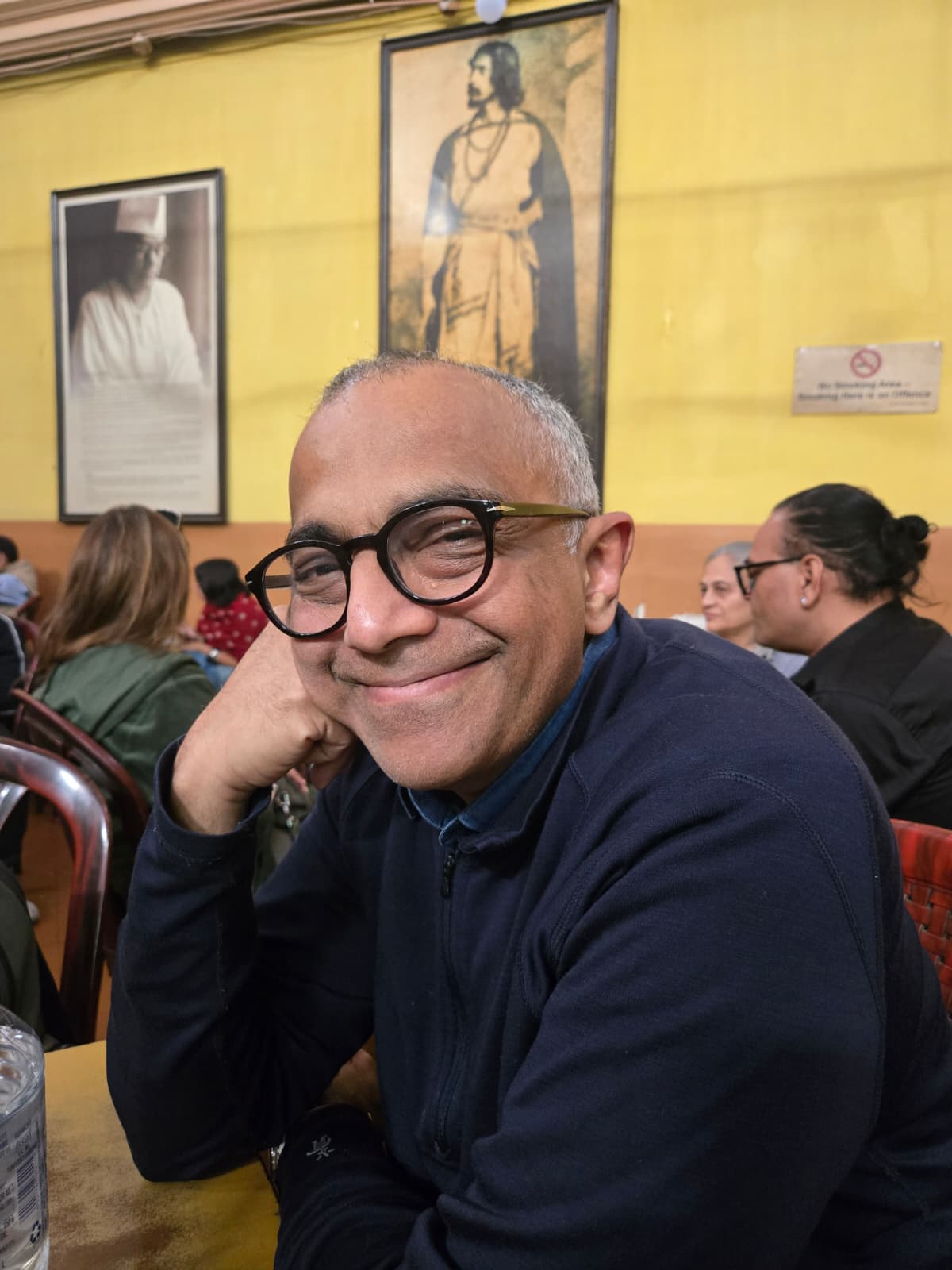
How do ordinary people get heard — and fail to get heard — by the institutions that govern their lives? That question has taken me from women’s self-help groups in Bihar to heavily armed garrison communities in Kingston, Jamaica. I am a development economist and social scientist, and for three decades I have worked at the intersection of economics, anthropology, sociology, and political science, combining rigorous empirical analysis with close attention to how people actually experience their lives — including what poverty feels like from the inside.
After more than two decades as a Lead Economist in the World Bank’s Development Research Group, I have moved into a more independent phase of my career as a scholar, writer, and teacher, pursuing questions that institutional constraints often made difficult to sustain. I am currently the Roberta Buffett Distinguished Scholar-Practitioner in Residence at Northwestern University, and will be the Distinguished University Fellow at the National Law School of India University (NLSIU) in Bangalore starting in November 2026.
My early research helped open economics to topics then considered peripheral or unmeasurable: domestic violence, dowry practices, public celebrations, sex work, and price heterogeneity in village markets. It showed that empirical rigor and ethnographic depth are not in tension — that bringing them together produces better science and more honest accounts of social reality. Culture and Public Action (2004), co-edited with Michael Walton, played a formative role in bringing culture, aspiration, and inequality traps into mainstream development debates.
Over time, my focus shifted toward collective action and democratic participation — the conditions under which ordinary people can reshape power relations rather than simply be consulted by them. Localizing Development: Does Participation Work?, co-authored with Ghazala Mansuri, is a synthesis of the global evidence on participatory development. Oral Democracy: Deliberation in Indian Village Assemblies, co-authored with Paromita Sanyal, examines how deliberation works — and fails — in practice.
My forthcoming book, Revolution by Stealth: How Women’s Groups Catalyzed a Cultural Transformation in Bihar (with Shruti Majumdar and Paromita Sanyal; Cambridge University Press, 2026), examines how Jeevika — a large-scale women’s self-help group program in one of India’s most patriarchal states — produced rapid and durable shifts in gender relations. Drawing on four years of qualitative fieldwork across ten villages, it traces how collective organization transformed not just economic outcomes but cultural norms, women’s public authority, and the terms of social life itself. The book argues that culture is not a residual constraint on development but a site of political economy — one that can be deliberately, if carefully, reshaped.
As a practitioner, I have worked closely with governments, civil society organizations, and multilateral institutions on the design and evaluation of large-scale development programs. From 2010 to 2020, I led the World Bank’s Social Observatory, embedding researchers within implementation teams to enable adaptive learning and context-sensitive policy design — treating practice as a source of knowledge rather than simply a site of application.
My current work takes a new methodological direction: using artificial intelligence and natural language processing to analyze thousands of open-ended interviews, studying aspirations, identity, and well-being in ways that neither standard surveys nor conventional ethnography can achieve alone. This is both a technical contribution and a substantive argument — that social science has systematically undervalued what people say about their own lives, and that the tools now exist to take it seriously at scale.
My research spans India, Indonesia, Malaysia, Nepal, Bangladesh, and Jamaica, and has been published in leading journals across economics, political science, sociology, and development studies. I hold a BA in Economics from St. Xavier’s College, Mumbai, and a PhD in Economics from the University of Pennsylvania, and have held academic appointments at the University of Chicago, the University of Michigan, Williams College, and Brown University. I am a Fellow of the International Economic Association, Chair of the Advisory Committee of CIFAR’s Boundaries, Membership, and Belonging program, and a Non-Resident Fellow at the Center for Global Development.